
Chat Topics From Authors - Part 3
Faster Track to Flow State.
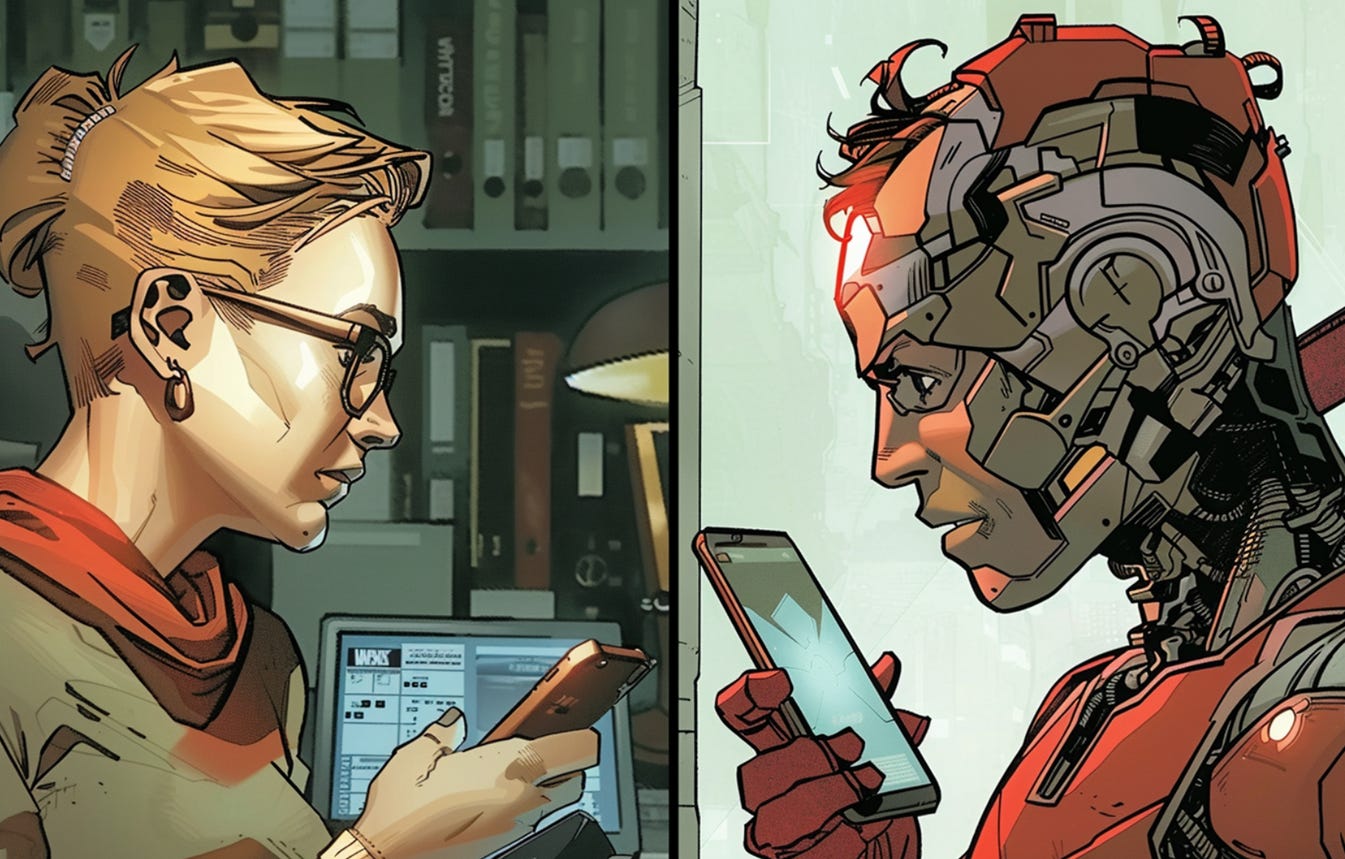
The premise of the Chracters on Call Chat Guide is that what authors believe makes stories work are credible ideas that you can validate yourself right here on Substack. Use these examples to create chat topics with your own fictional character.
I’m adding these to the author examples in the Chat Guide to provide access to all of them from the How to Chat link, with video sample chats and guidiance on creating engaging dialogue with your character—in the navigation, and right here:

Goal 1: Story Ideas
Why Your First Chapter Needs a Reversal in The Writer’s Attic by Parker Peevyhouse: “Shocking reversal of expectations, establishes the setting and genre more sharply… clues readers into what more they can expect from the series.”
Let’s Make Things Tense by Rebecca Makkai in SubMakk: “Regardless of where the story starts, tension is (usually) what draws us in. And tension is an art. A devious, sadistic art.” Have at it with your character in all of Rebecca’s tension categories.
Blog post Connective Tissue by Nathan Bransford “One of the best ways to make characters’ gestures feel more specific and individualized is to draw upon the physical setting. All that arduous, supposedly unimportant connective tissue? It’s truly where the magic is made.” Nathan publishes in his blog, but has a Substack that sits unused. Let’s show him how effective that could be!
Intro to Roots of the Tangleweood by Sandy Shaller: “I wander through the Tanglewood and the leaves and roots speak to me. I write down the stories they tell.” Chatting with the anthropomorphic character you created from creatures or objects can give them the voice and personality to suspend disbelief.
Hello, Sweet Meats by Honeygloom: “So far I’ve written about aliens, Mothman, parasites, obsession, giant inter-dimensional insects, nano-materials, and more.” Ask your plant-based character to explore the horrors they’ve produced and might do next.
Freeple of Baid in Ferns of Columbo by Jon T. “While I was examining this lovely yellow bloom, a beautiful green pollinator lands in front of my macro. I am surprised when it introduces itself. Hello Babe, my name is Helgason, they say. I’m not usually at a loss for words, but this peculiar event catches me off guard. Strange because we only use natural bio pollinators here. Soft things—not exactly talkative.” Chat with plants, insects and even inanimate objects to discover their voice and create their personas.
Beyond the Haunted Asylum by Grace Anderson in Grace’s Spook Show: “In horror movies, we often see mental patients behaving in extremely violent or otherwise behaving in ways that are meant to scare and shock the audience. This couldn't be further from the truth. Mentally ill people are much more likely to be victims of violent crime rather than perpetrators.“
Cinder Hollow, on Short Shivers by Stephen Duffy masters the jump scare: “Bill's voice dropped to a horrified whisper. "She’s in the hospital. God help us.” I’ve always enjoyed putting characters in situations where they’re completely screwed, and I had a lot of fun writing Bill’s scene."
Goal 2: New Stories
The Time Witch in Tell Me a Mystery by Ann Pashak: “Things go south on Evangeline when she’s in 1910. She has to battle two attacks, one by the Coven and then Adas Abernathy, but unexpected help comes from Starlight. Her magic is teleportation.”
The Lake Michigan Timetable in Twisting the Myths by Patricia J L “The list of strange disappearances, wrecks and crashes, and mysteries goes on and on. I may have to revisit this topic to share more because I’ve only tapped the tip of the iceberg of the Lake Michigan Triangle. The mysteries hidden in the water go deep and far.”
Initiation, a coming of age biopunk sci-fi story in Story Voyager by Claudia Befu: “This story world is a continuation of the Dust Road universe and is set in the year 3600 CE.” Chat with your character to plot a story that reveals your fictional world through individual actions.
Note from E. F. Ortega, author of Chronicles of the Talekeeper: “Unlike the typical archetypes that we see repeated constantly in stories, I like to add color, meaning, and depth to my villains… and that is because for most of my childhood, beyond my control, I was the bad guy simply because I stood up for doing the right thing. Being an author is about injecting parts of your life experience into characters and the plot in such a way that the story serves to be entertaining but also an abstract and cheap form of therapy.”
In 77 Character Archetypes by Nathan Baugh in Worldbuilders (on Beehiiv)” Build familiar, yet unique characters through archetypes. The characters have different personalities, are put in different settings, and yet their foundational behavior aligns with a specific Character Archetype. They can be molded, twisted, and turned on their heads to create something fresh. Archetypes are familiar, yet unique.” Create your character’s unique architype by chatting about who they want to be.
How to Write Funny Characters by Scott Dikkers, author of Substack No Dikkering Around presents 40 comedy character archetypes, and how to choose and use them. Free on Kindle Unlimited.
Goal 3: Flow State
The following author observations discuss why flow state is essential and how they attain it. Chatting with your character is an effective addition to these methods.
Podcast with Mike ‘The Owl Guy’ Clelland about the Role of the Artist in the Paranormal with Matt Cardin: “Art can be employed as a form of spiritual/meditative practice when you are rewarded with the ‘flow state’ in which you lose sight of time—and and even yourself!—when you are totally committed to the artistic process, which in many ways it is more important than the end result.”
In F*ck Productivity. Choose Flow States, in Unfiltered by Tim Denning: “To access flow states, it helps to witness others in this state. The best place to see flow is in the creative sector. Go watch a Taylor Swift concert and you’ll see she’s in flow.“ Can’t afford a Taylor Swift concert ticket? Chat with your character for free.
The Face in the Window in Crockerfeller Tales by A R Crocker opens with the insight “The most liberating moment in life is when you realize that the persona you've created for others is far less interesting than the person you truly are.” Ask your character how they feel bout that.
5 Ways to Improve Your Dialogue, in the blog Story and Plot by Tom Vaughan: “You know when people tell you to listen to other people's conversations to help your dialogue? The best thing you can take from that is the rhythm of those conversations. The wrong lesson? Trying to capture how people "really talk." Chat with your charcter to find that rhythm.
Ready to Collaborate With your Characters?
Subscribe for free, request your free character profile, and spend more time in flow state.